
Fall’s the season basements start smelling like, well, basement and most people’s first instinct is “I guess I need a dehumidifier,” buy one, run it, and are surprised when the smell only half-goes-away. Before you spend $200 on a machine, there’s a much cheaper, much more common culprit worth ruling out first. Let’s walk through it in order, cheapest fix to most involved.
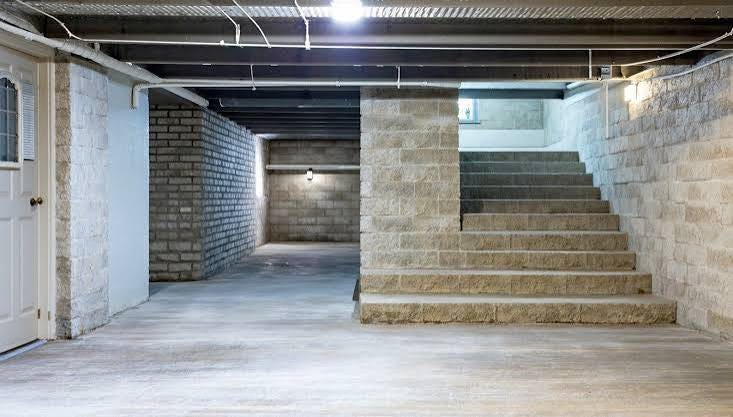
Why fall specifically is when you notice it
Basements smell musty because of moisture and mildew, and fall is when the conditions for that flip. Summer humidity has been soaking into concrete and any porous material down there for months, and now that the air outside is cooling off faster than the ground and your basement walls, you get condensation moisture pulling out of the air onto cooler surfaces, exactly like a cold glass of water sweating on a warm day. That extra moisture is what wakes the smell back up right around now.
So the smell isn’t new it’s the same underlying moisture issue you’ve had all along, just more noticeable once the temperature swing kicks in.
Thanks for reading Homeowner Help! Subscribe for free to receive new posts and support my work.
What’s actually causing the smell (in order of likelihood)
1. Something specific is holding moisture check before you assume it’s “the whole basement”
Before blaming the room in general, walk the space and actually smell your way toward the source, the way you’d track down a smell in a fridge. Common, cheap-to-fix offenders:
- Cardboard boxes stored directly on the concrete floor cardboard wicks up moisture from concrete like a sponge, even concrete that looks and feels dry. This is, by a wide margin, the single most common cause of a “whole basement smells musty” complaint that turns out to be four boxes in the corner. Swap anything long-term stored down there into plastic totes with lids, off the floor.
- An old rug, carpet pad, or piece of furniture that’s absorbed moisture over one too many summers
- A damp towel or gym bag someone left down there weeks ago (more common than you’d think)
This costs nothing and takes ten minutes to check, and it solves the problem outright a surprising amount of the time.
2. Check your gutters and downspouts before you check anything inside
If the smell is genuinely coming from the walls or floor themselves rather than a specific item, the actual source is very often outside the house, not inside it. Water pooling against your foundation because a downspout dumps right next to the house, or a gutter that’s clogged and overflowing along one wall, pushes moisture straight through the foundation into your basement no visible leak required, just a slow, constant dampness that shows up as a smell before it ever shows up as a stain.
- Walk the perimeter after it rains (or run a hose along the foundation for a few minutes if it hasn’t rained recently) and watch where water goes.
- Downspouts should carry water at least 4–6 feet away from the foundation a cheap plastic extension piece (a few dollars at any hardware store) fixes this instantly if yours dumps too close.
- Clear gutters if you haven’t since spring this is the free, no-purchase-required fix, and it’s often the actual root cause behind a “damp basement smell” that people assume needs a bigger intervention.
3. Ventilation is any air actually moving down there?
Basements are notorious for having zero airflow, which means any moisture that does get in has nowhere to go and just sits, feeding mildew. A cheap box fan running for a few hours a day, or just cracking a basement window on a dry fall day, can meaningfully cut down the smell simply by moving stale air out.
4. If you’ve ruled out the above and it’s still musty, now a dehumidifier makes sense
If there’s no obvious item holding moisture, your gutters are clear and directing water away from the house, and there’s still a persistent, whole-room mustiness, that’s the point where a dehumidifier is solving a real problem instead of masking a five-dollar fix. Look for one sized for your square footage (most basement-appropriate units are rated for 1,000+ sq ft) and empty the reservoir regularly, or spring for one with a drain hose so it empties itself.
The one you shouldn’t DIY past
If, alongside the smell, you’re seeing actual mold growth (fuzzy or discolored patches, usually black, green, or white), a musty smell that’s gotten dramatically worse very suddenly, or visible water intrusion during or after rain, that’s worth having a professional a waterproofing contractor or, for mold specifically, a remediation specialist take a look rather than working through the list above. Small persistent dampness is a DIY problem. Active water intrusion or visible mold growth is not.
Thanks for reading Homeowner Help! Subscribe for free to receive new posts and support my work.
Most of the time, this ends with either an empty cardboard box in the trash or a $4 downspout extension not a $200 appliance. Worth the ten minutes to check before you assume the expensive fix is the only fix.
Next up: why your outlets keep tripping the same breaker, and the difference between a breaker that’s actually broken and one that’s just doing its job.
— Talk soon, Homeowner Help


Leave a Reply