
Hey, welcome to Homeowner Help. I’m going to be walking you through the stuff that breaks, drips, squeaks, and mysteriously stops working in a house, one problem at a time, the way I’d explain it to a neighbor over the fence instead of the way a manual explains it to nobody in particular.
First one’s a classic, because I guarantee at least one of you is dealing with it right now: the toilet that just keeps running.
The 2 AM sound you know too well
You know the noise. You flushed it twenty minutes ago, you’ve moved on with your life, and it’s still quietly running in the background like it’s got somewhere to be. Eventually you either learn to tune it out or you get up and jiggle the handle, which sometimes works for reasons nobody’s ever explained to you, and then a week later it’s back.
Here’s the thing this is one of the easiest, cheapest fixes in the entire house, and almost nobody knows that, because the inside of a toilet tank looks vaguely intimidating and most of us have never had a reason to lift the lid and actually look.
So let’s look.
Thanks for reading Homeowner Help! Subscribe for free to receive new posts and support my work.
What’s actually happening in there
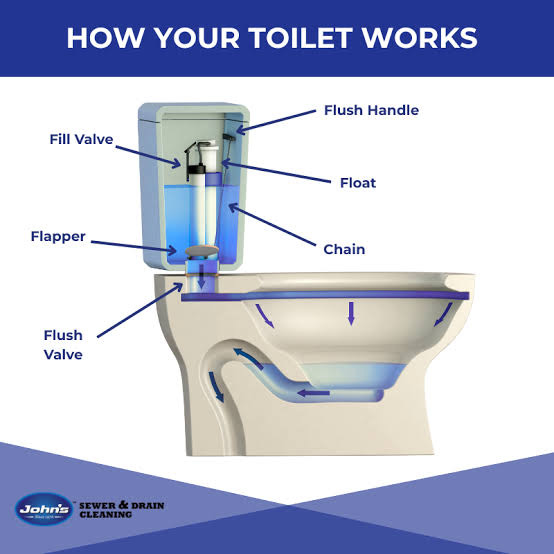
Take the lid off your tank (it just lifts straight up, set it somewhere safe, it’s heavier than it looks). Inside, you’ve basically got three things you care about:
- The flapper — a rubber piece at the bottom that lifts up when you flush and drops back down to seal the tank
- The fill valve — the taller mechanism, usually on the left, that refills the tank after a flush
- The float — attached to the fill valve, it rises with the water and tells the fill valve when to stop
A running toilet is, about 90% of the time, one of two things: the flapper isn’t sealing (so water keeps trickling from the tank into the bowl, and the fill valve keeps trying to compensate), or the float is set too high (so the tank overfills and water spills into the overflow tube, which just quietly drains it away sounds like running water because it is).
The fix, flapper edition (most common)
- Flush the toilet and watch the flapper. Does it drop flat and seal completely, or does it kind of drift down at an angle, or not fully close?
- If it’s not sealing, it’s usually because the little chain connecting it to the flush handle is too long (so the flapper can’t drop all the way) or the flapper itself is old and warped rubber degrades over years of sitting in water, it’s not a design flaw, it’s just what rubber does.
- Chain too long: unhook it from the arm and re-hook it a link or two shorter, so there’s just a little slack, not a lot.
- Flapper worn out: turn off the water supply valve behind the toilet, flush to drain the tank, unhook the old flapper (it usually just unclips from two pegs at the base), and take it to the hardware store to match or just buy a universal flapper, they’re about $8 and fit most standard toilets. Clip the new one in, reconnect the chain, turn the water back on.
That’s it that’s the whole repair. No tools required for step 3, maybe a pair of pliers for step 4 if the clips are stiff.
The fix, float edition
If the flapper looks fine and it’s still running, check the water level in the tank. There’s usually a line marked “water level” molded into the plastic, or it should sit about an inch below the top of the overflow tube. If the water’s right at or above the top of that tube, it’s spilling in and constantly draining that’s your running sound.
- On older toilets with a ball float on an arm, there’s a small screw where the arm meets the fill valve turning it adjusts how high the float sits before it shuts off the water.
- On newer toilets with a cup-style float that slides up the fill valve column, there’s usually a clip or a squeeze-tab you slide down to lower the shutoff point.
Either way, you’re just lowering the water level an inch and flushing to test. Small adjustments you don’t need to overcorrect.
Why this matters more than the annoying noise
A running toilet isn’t just irritating at 2 AM it can genuinely run up your water bill. A toilet that’s continuously trickling can waste anywhere from tens to hundreds of gallons a day depending on how bad the leak is. If your water bill’s crept up and you can’t explain why, this is one of the first places I’d check.
One free way to test if you’ve actually got a leak, even a quiet one you can’t hear: drop a few drops of food coloring into the tank, wait fifteen minutes without flushing, and check the bowl. Color in the bowl means water’s getting through the flapper seal even when it looks closed.
One more thing before you go
If you did the flapper swap and the chain adjustment and it’s still running, there’s a decent chance the fill valve itself is the problem, not just the float those are a slightly bigger job and worth a proper look at in a future post, since they involve unscrewing the water line rather than just clipping a part in.
For now go check your flapper. I’d bet good money that’s the fix.
 Homeowner Help
Leave a comment